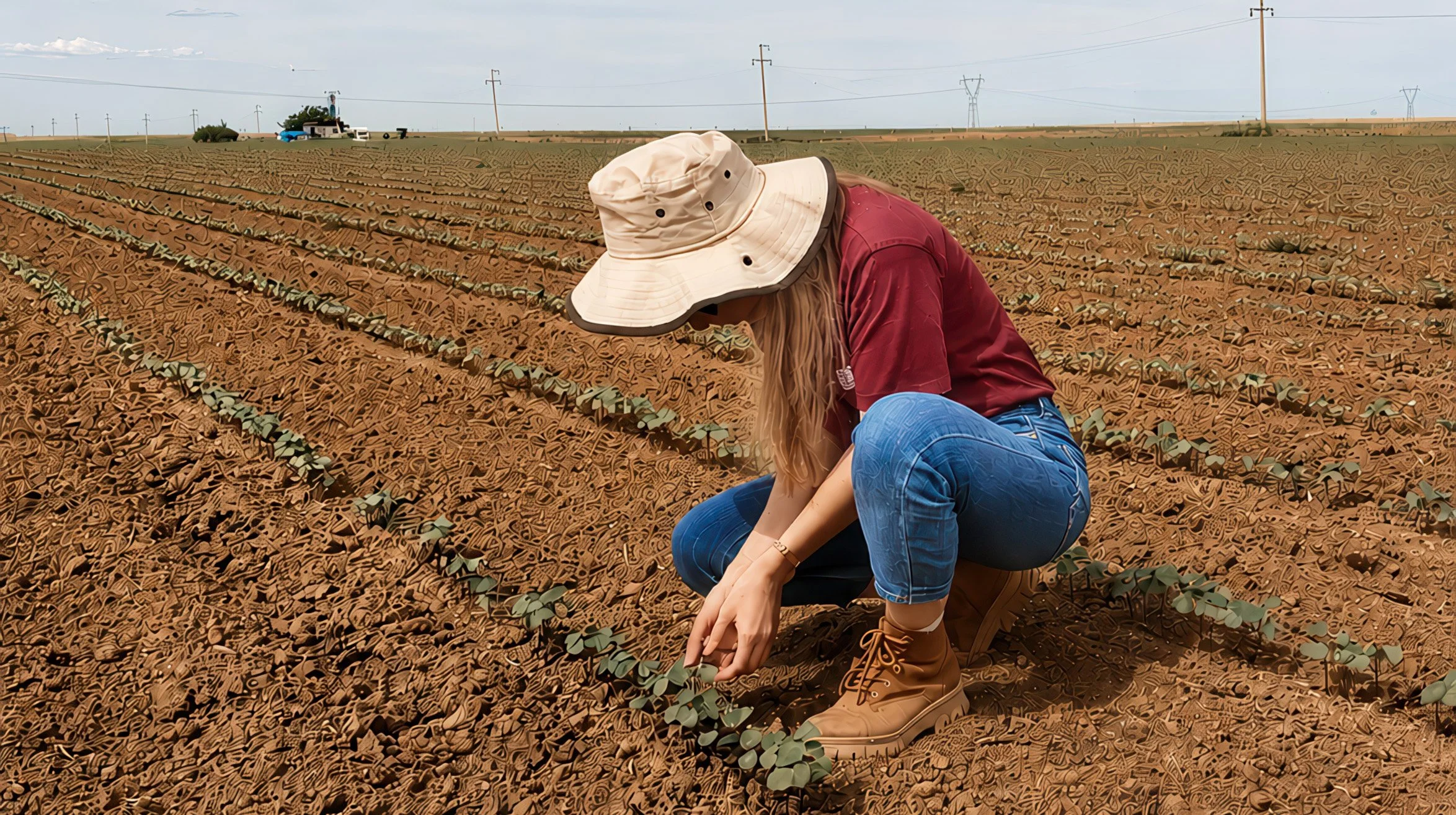
Kübra Elmas
Agricultural Engineer
Kübra Elmas is an agricultural engineer from Şanlıurfa, Türkiye, whose work focuses on regenerative organic cotton and the long-term relationship between land, climate, and cultivation within the Euphrates basin.
Raised in a region with thousands of years of agricultural history, she brings both scientific understanding and lived experience to the project — a perspective shaped not only by formal study, but by lifelong familiarity with the land, its seasons, and the people who work within it. Her work is further informed by close relationships with farming communities across the region and a professional life spent working alongside growers throughout the agricultural landscape she calls home.
During her university studies, she spent approximately eighteen months in Poland, an experience that broadened her understanding of how different cultures approach agriculture, landscape, and the environment. It was also during this period that she developed a growing interest in photography as a way of observing and documenting the world around her.
Her contribution to The Breath of First Fields extends beyond field collaboration. Through independent essays, observation, and regional knowledge, she brings an informed perspective on contemporary agricultural life, the people who work within it, and the environmental and economic conditions affecting the region. Her relationships with growers, researchers, and agricultural communities provide opportunities to examine both established practices and new approaches to cultivation.
Her professional experience includes regenerative organic cotton production and an understanding of the relationships between crop development, water management, climate, and agricultural research. These areas of knowledge are increasingly relevant as growers respond to changing environmental conditions, developments in agricultural science, and the practical demands of food and fibre production.
Within the project, her writing draws on both scientific knowledge and personal experience. Her essays contribute an independent understanding of southeastern Türkiye, examining contemporary agriculture, the people and communities involved, and the circumstances influencing its future. Together with the photography, her work offers another perspective on a region whose agricultural importance extends from its early history to the present day.